If you are new to this, the question of free vs paid ways to start an online business can feel like a test you might fail. Pay too soon and you worry you’ve wasted money. Stay free too long and you worry you’re moving slowly or missing something. Underneath both worries is a fear of being sold to, which makes every page you read feel slightly suspect.
This article lays out what each level realistically gives a beginner, including where free is enough and where it stops being enough. This site is a Wealthy Affiliate referral site, so I earn a commission if you become a paying member. You should know that before you read my opinion on anything, and I have tried to write this so you can decide without me.
Why this choice feels so stressful when you’re new
When you don’t yet know how online work operates, you can’t judge what is worth paying for. A price tag has nothing to compare against. You also see two kinds of advice: people who say you should never spend a cent, and people who say you can’t get anywhere without buying their program. Both can’t be right, and as a beginner you can’t tell which one is.
The stress comes from missing information, so the fix is information. Once you know what free usually covers, what paid usually adds, and what each choice costs you in ways that don’t show on a price tag, the decision gets much smaller. You are no longer guessing whether to “invest.” You are choosing which of two ordinary options suits where you are today.
What free options really give you (and what they quietly leave out)
Free options are genuinely useful for the first stretch. They let you find out whether you enjoy the work at all, which is worth knowing before spending anything. Free options usually include things like:
- A free account on a learning platform, where you can read or watch introductory material
- A free website or blog on a hosted builder
- Free social media profiles for sharing what you make
- Free tools for writing, simple graphics, and keeping notes
Free is a good fit when your goal is to explore. If you want to see whether writing about a topic holds your interest for a few weeks, you do not need to pay anyone for that.
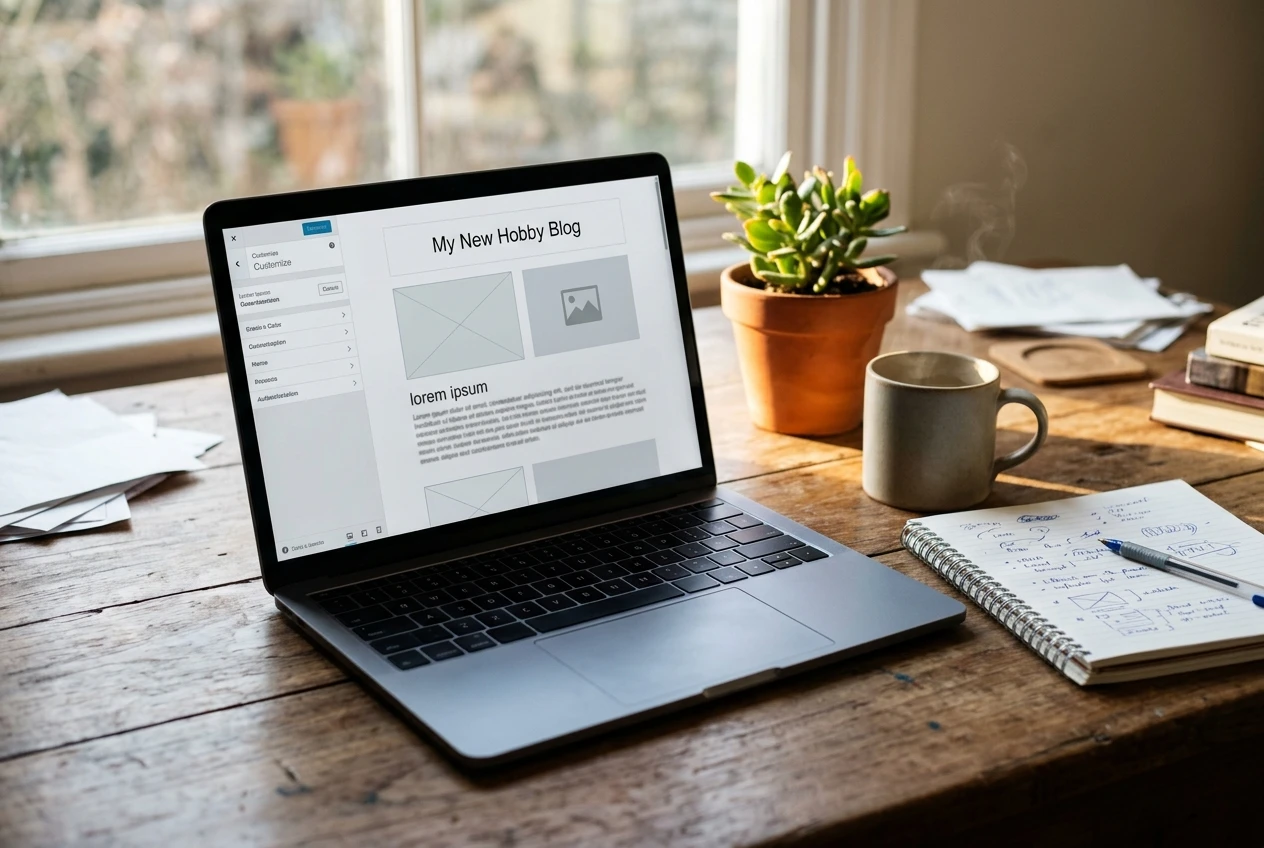
What free tends to leave out is less obvious, because it rarely announces itself. Many free plans limit how much you can build or publish, how much support you can reach, or how far you can customise. A free site often carries the provider’s name in its web address, which can look less established to visitors. Free learning material is often a sample of a larger course, so you get the first lessons and then reach the edge of what is offered.
None of that makes free a bad choice. It means free is built to let you try something, and the limits are where the provider hopes you will decide whether to pay.
What paying for a starting option usually changes
Paying usually changes three things: how much is available to you, how much support you can reach, and how much of the setup is already done.
Access. The material that was a sample becomes the full set. Tools that were capped become usable at the level you need. For a beginner, this mainly means you stop running into walls partway through a task.
Support. A paid level often gives you more ways to ask questions and get answers from people, which matters most when you are stuck and don’t know what to search for.
Setup. Instead of assembling a website host, a writing tool, a learning source, and an image tool from five different places, one paid membership may bring several together. That saves you work, and it can save money compared with buying those pieces separately, though you should check that against your own situation.
Paying does not change the work itself. You still have to choose a topic, write, publish, and be patient while search engines and readers find you. Paying removes some obstacles and puts nothing in place of effort. Any option that implies otherwise deserves skepticism, and nobody can honestly promise you income from a starting point.
The costs nobody mentions on either side
Every option has costs beyond the price, and they are easy to overlook.

The hidden costs of free
- Time. Piecing together free tools means researching each one, learning each interface, and fixing the places where they don’t fit together. A beginner can spend weeks on this and feel busy without producing anything readers see.
- Tools you outgrow. If you build on a free platform and later need something it can’t do, moving your work elsewhere takes effort.
- Stalled momentum. With nobody to ask, small questions can sit for days. Beginners often stop at exactly that point, not because the work is too hard, but because they got stuck and had no one to ask.
The hidden costs of paid
- Paying before you know you’ll continue. If you pay for a full level and lose interest after two weeks, that money is gone. This is the strongest argument for starting free.
- Recurring charges. A membership repeats until you cancel it, so it helps to know how and when you can stop.
- Feeling obliged. Having paid, some people push themselves to use everything at once and burn out. A paid level does not require you to move faster.
Neither side is free of cost. One costs mostly time and the other costs mostly money, and which is more precious to you depends on your own situation.
Where Wealthy Affiliate’s free and paid levels sit, side by side
Wealthy Affiliate offers a free account and a paid membership. The free account is meant for looking around: you can create it, see how the platform is laid out, and get a feel for the learning and the way a Hub is organised before spending anything. The paid membership is the level for someone who has looked around and decided to build there.
Free account Paid membership Purpose Exploring and trying the platform Building on the platform over time Cost to you Nothing A recurring membership fee Best for People deciding whether this suits them People ready to commit time to a project Commitment None Continues until you cancel
The exact list of what each level includes, and what the membership costs, is shown on the Wealthy Affiliate site and can change. I’m deliberately not copying specifics here, because a number that was right when I wrote this could be wrong when you read it. Check the current details there before you decide.
What the paid level is built around is a connected place to work. Within the platform you have Learn for lessons, LIVE for classes and their recordings, a Writer and an Artist for producing articles and images, and your own Hub for the project you are building. Work that uses the Writer or the Artist is charged in Credits at what the work actually cost, and a run that fails costs you nothing. That is the kind of thing worth reading about on the site itself so you can see whether it matches how you like to work.
A simple way to decide which level fits you right now
Ask yourself four questions and answer them honestly.

- Do I know yet that I want to do this? If the answer is “I’m not sure,” start free. Uncertainty is the reason free exists.
- Can I give it regular time each week? Paid access you can’t use is wasted. If your schedule is unpredictable for the next month, wait.
- Would losing the membership fee hurt? If the amount would cause real strain, stay free for longer. A comfortable pace is better than financial pressure.
- Am I stuck on something free can’t solve? If you have used the free level and keep running into a specific limit, that is a reason to consider paying. A vague feeling that you “should” is not.
A sensible rule: start free, set yourself a short trial period, and pay only when you can name the specific thing that paying would let you do. If you can’t name it, you don’t need it yet.
If you start free, what to do with your first week
A free account is worth more when you use it deliberately. Here is a gentle plan for seven days, and none of it needs to be rushed.

- Day 1: Create the account and click around without trying to accomplish anything. Notice where lessons are, where help is, and what feels confusing.
- Day 2: Write down two or three topics you could talk about for a long time without getting bored. This is your raw material.
- Days 3 and 4: Work through one introductory lesson and write down any questions it raises. Note which ones you could answer yourself with a bit of searching and which you couldn’t.
- Day 5: Look at what the free level lets you do and write down where you hit a limit, if you did.
- Day 6: Rest, or revisit whichever lesson was most useful.
- Day 7: Review your notes. Do you want to keep going? Is there one specific thing a paid level would solve? If yes, you now have a real reason to pay. If not, carry on free and check again in a few weeks.
By the end you will know more about the platform and about your own interest than any sales page could tell you.
Take a look around at your own pace
If you’d like to see how this works before deciding anything, create a free Wealthy Affiliate account and look around at your own pace. There’s nothing to decide about paying until you have seen it for yourself. If you do sign up, I’ll be glad to help you get started.