Why do beginners quit affiliate marketing? Rarely because they cannot learn it. More often a specific moment arrives, it feels heavy, and stopping starts to look like the sensible response. Those moments are predictable, and almost everyone starting online meets them.
Below are five of them, plus what to do if you have already stopped. Each one gets a plain explanation of why it happens and one small action that fits the moment. If you recognise yourself in one, nothing is wrong with you.
The Setup High Ends and the Quiet Feels Like Failure
The first stretch of a new website is full of visible progress. You choose a niche, pick a name, get the site live and publish a first page. Every day something exists that did not exist the day before.
Then the setup is finished and the visible progress stops. Nobody comments, nothing arrives in your inbox, and the days feel flat compared with the busy start. It is easy to read that flatness as a sign the whole thing is not working.

A new site has no readers yet, so quiet is the normal state at this point. It tells you nothing about your ability. The excitement was coming from the novelty of setting things up, and novelty always wears off.
One small, kind action: pick a single task that takes twenty minutes, such as improving the opening paragraph of a page you already published, and finish it. Finishing something small gives you the feeling of progress back without waiting for visitors to supply it. If you want a sense of how long the quiet stretch usually lasts, the quiet stages between day one and your first payout lays it out.
The Blank Page: Feeling Like You Are Not Qualified to Write Anything
At some point you will sit in front of an empty page and think that everyone reading it will know more than you. Who are you to explain anything? Plenty of beginners close the laptop at this point and do not open it again for a week.

That worry assumes you must be the top expert before you can help anyone. A reader looking for a first answer does not need the world’s leading authority. They need someone who has done a bit of homework, explains it clearly and is honest about where their knowledge ends. A person a few steps ahead of the reader is often easier to follow than a specialist who has forgotten what the basics felt like.
Writing also gets easier because you do it, not because you feel ready first. The feeling of being qualified usually shows up after the pages exist.
One small, kind action: choose one question a newcomer to your niche might ask, and write the answer as if you were replying to a friend. Give yourself ten minutes. You do not have to publish it. You are only proving to yourself that you have something to say.
Watching Other People’s Wins While Your Site Has No Visitors Yet
Scrolling through other people’s results is one of the quickest ways to feel behind. Someone posts a milestone, someone else shares a screenshot, and your own site, with its handful of pages and no visitors, looks tiny by comparison.
What you see in those posts is a result with the beginning removed. You do not see how long that person has been working, how many pages came before it, or what they got wrong along the way. You are comparing your first weeks with someone else’s best moment, and that comparison will always look bad.
Other people’s wins can be useful if you treat them as information about what is possible rather than a score you are being graded against. They are not a measure of your pace.
One small, kind action: for a week, limit when you look at other people’s results, and compare your site only with your own site from last week. Did you add a page, fix a sentence, learn a term you did not know? That is the measurement that applies to you right now, and tracking what you can control gives you a simple way to do it.
Paying for Something That Has Not Paid You Back
Money makes the quiet feel louder. If you are paying for a membership, a domain name or a tool, each renewal notice can feel like a small accusation: you are spending, and nothing has come back.
Questioning that spend is reasonable. Anyone should ask whether a cost is earning its place. The trouble is that the question tends to arrive at the lowest point of your week, when everything looks bleak, and you end up deciding with a tired mind.
A calmer approach is to separate two questions. One is whether the thing has paid you back in money yet, which at an early stage the answer will usually be no. The other is whether you are using it and learning from it, which you can actually check.
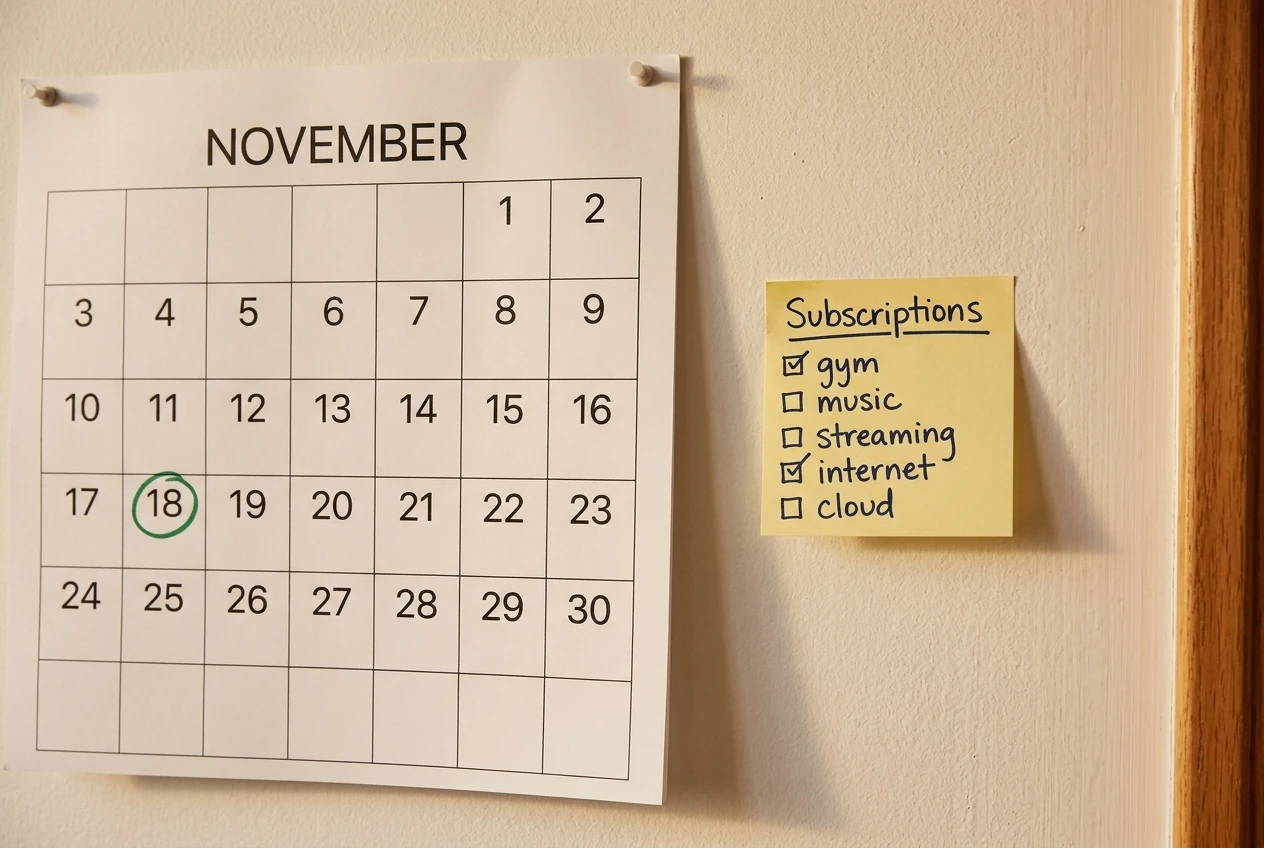
One small, kind action: write down what you pay for, and next to each item, one thing you did with it in the last two weeks. Then pick a date a month or so away to review the list. Deciding on a schedule means you do not have to decide at midnight. If you want to see the whole picture first, the real cost of starting online counts it in money, hours and patience.
The Weeks When Nothing Seems to Be Working
A rougher moment comes a little later. You have been doing the work for a while, pages are published, and still there is no sign of movement. Every task starts to feel pointless, and you may wonder whether you are doing something wrong.
One useful way to get out of that fog is to stop asking whether it is working and ask which stage you are in. Building an audience happens in recognisable stages:
- Get your bearings: learning the tools and the basics so you know what you are doing.
- Open the doors: getting your first pages live so there is something to find.
- Meet your first readers: the first few people who arrive and read.
- Earn a little trust: being helpful and consistent enough that people come back.
- Help them take a step: offering a useful next move to someone who is ready for it.
Each stage has its own work, and the signs of success are different in each. If you are still opening the doors, a lack of trust-building results is not a failure. It is the wrong measuring stick.
One small, kind action: decide which stage you are in, and do the one task that belongs to it. Nothing else is required today. If a steady rhythm would help, building a routine that does not need excitement is written for exactly these weeks.
Pausing Is Not Quitting: A Gentle Way to Come Back After a Break
Sometimes the right move is a break. Work gets busy, someone in your family needs you, or you are simply worn out. A pause is a normal part of building anything alongside a life, and it only turns into quitting if you decide it has.
What makes coming back hard is usually guilt. The longer you stay away, the bigger the return feels, so you put it off again. You can make the return much smaller than you think.

Here is a gentle way back:
- Open the site and read one page you wrote. Notice what is good about it. You will probably find it is better than you remembered.
- Pick the smallest task available. Fix a typo, add a link, or write one paragraph. Skip any task that needs a big block of time.
- Set a short session. Fifteen or twenty minutes is enough for the first day back.
- Leave yourself a note. Before you close the laptop, write down the next small task so that tomorrow you do not have to decide where to start.
You do not need to make up for the time you were away. The pages you wrote are still there, and so is what you learned. Start from where you are.
If you are in one of these moments right now, start with the calm plan for your first 30 days. It gives you small, ordered tasks to return to, so you always know what the next one is.