The first 30 days of affiliate marketing for beginners usually feel like standing in front of a hundred open doors. Every video, forum thread and blog post says something different is the thing to do first. This plan gives each week one focus and one habit, so you always know what today’s work is.
It makes no promises about income, because nobody can honestly make them for a first month. What it does promise is a site that exists, some articles published, and a routine you can keep going.
Why the first month feels so overwhelming (and why that’s normal)
A new beginner has to make decisions about a topic, a website, a writing style and a way of finding readers, all before getting any feedback. With no feedback, every choice feels risky. Advice online also arrives in no particular order, so a tip meant for month nine lands in front of someone in day two.

The feeling does not mean you are doing something wrong. It means you are doing a lot of new things at once. The fix is to do fewer of them at a time: one focus per week, and one small habit that you repeat.
Here is the whole month at a glance:
- Week 1: choose a topic and set up your site. Habit: a short work session at the same time each day.
- Week 2: publish. Habit: write on set days, and post before you feel ready.
- Week 3: study one thing at a time and apply it to your site right away. Habit: one lesson, one change.
- Week 4: review what you built and plan month two. Habit: a weekly look back.
Week 1: Settle on a niche and get your site standing
This week has two jobs, and they are enough. First, pick the subject your site will cover. Second, get a basic website online with a name, a simple look and a few pages.
You do not need the perfect niche. You need one you can write about for a few months without dreading it. If you are stuck on that choice, the article on how to choose a niche you enjoy walks through it, so you do not need to settle it all over again here. Choose, write it down in one sentence, and move on.
Setting up the site is easier than most beginners expect. If you are choosing between free and paid ways to begin, the same applies: make the decision once, based on what you can comfortably afford, and avoid reopening it every day.

The habit for this week is a short, regular work session. Thirty to sixty minutes at the same time each day beats one exhausting Saturday, because you start to treat the work as routine rather than as a mood. Put it in your calendar like an appointment.
By Sunday, you want three things in place:
- A niche written as one plain sentence (“This site helps ___ do ___”).
- A live website with a name and a home page.
- A short list of ten or so topics your future readers might want help with.
That last list is the fuel for week 2, so keep it somewhere you can find it.
Week 2: Start publishing, even when it feels clumsy
Your first articles will not be your best. That is fine, because nobody is reading closely yet, and the only way to improve at writing for a site is to put pieces on it. A published imperfect article teaches you more than a perfect draft sitting in a folder.

Pick two or three articles from your topic list and write them this week. Choose questions a beginner in your niche would really type into a search box, and answer each one fully and clearly, in your own words. Aim for pieces that would help a single reader who knows less than you do.
The habit for week 2 is writing on fixed days. Choose, say, three days, and on each of them write one article or part of one. When the day comes, you do not decide whether to write; you only decide what to write about, and the topic list has already answered that.
A few practical points help:
- Write the first version without editing. Fixing it comes afterward, and mixing the two slows you down.
- Read each piece aloud once before publishing. Awkward sentences show up immediately.
- Publish when it is clear and honest, not when it feels polished. It will not feel polished.
Search engines take time to notice new sites, so expect very little traffic this early. A quiet week 2 is normal and says nothing about the quality of your work.
Week 3: Learn one thing at a time and put it to work
By now you have a site and some articles, so questions will begin to come up. How do I write a better headline? How do I find topics people search for? What goes in an affiliate recommendation? This is the point where the pile of advice becomes tempting again, and the habit for this week is the guard against it.
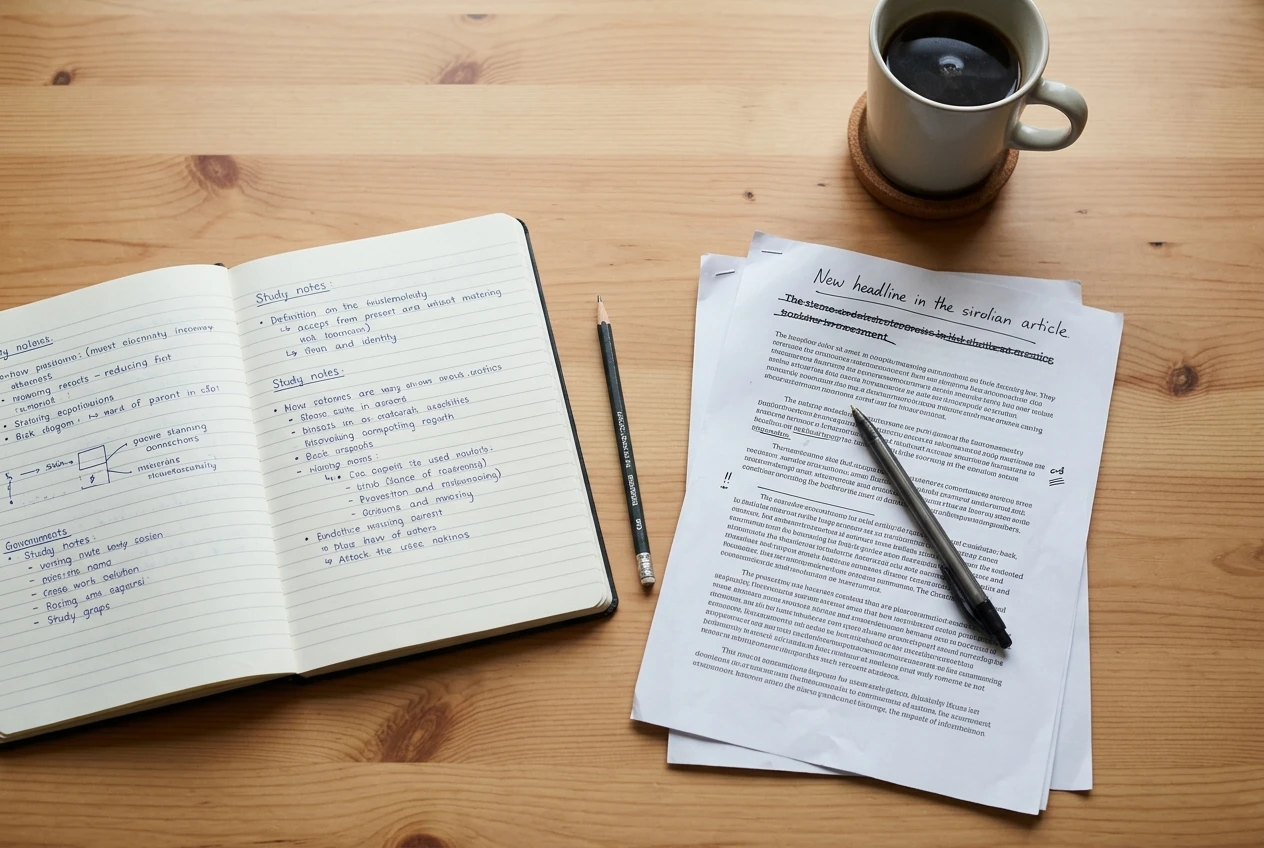
The habit is one lesson, one change. Pick a single thing to study, then apply it to your site the same day. If you watch a lesson on headlines, rewrite the headlines of the articles you have already published. If you read about structuring an article, restructure one of yours. Learning that never reaches your site fades quickly, and learning that does becomes a skill.
This is where having training and other beginners nearby is useful, because you can ask a question when you hit a wall rather than guessing for an evening. It is also a good week to look at the handful of tools you actually need, so you can check that you are not paying for or fiddling with software you do not need yet.
Keep publishing in the background. Even one new article this week keeps the week 2 routine alive, and it gives you a place to try whatever you just studied.
A simple rhythm for the week:
- Monday: choose the one thing to study.
- Tuesday and Wednesday: study it, taking notes in your own words.
- Thursday: apply it to your existing articles.
- Friday or the weekend: write one new article using it.
Week 4: Look back at what you built and plan month two
In the last week, you stop producing for a few days and look at what you have. Open your site as a visitor would. Read your home page, then your articles in order. Notice what is clear, what is confusing, and which piece you would be happiest to show someone.
Then write a short review with three questions:
- What did I publish, and how many articles is that?
- Which part of the work did I keep doing without forcing myself, and which part did I avoid?
- What is the single most useful thing I want to get better at next month?
The second question matters most. If you avoided writing but enjoyed setting up pages, that is information about where your habit needs support, such as a different writing time or shorter sessions.
The habit for week 4 is the weekly look back, and it is one you can keep for as long as you run the site. Close the month by choosing a focus for each of the next four weeks. They can be as simple as publishing more, improving older articles, or studying how to recommend products honestly.
What to ignore completely during your first 30 days
A lot of advice is correct but arrives too early. You can set aside the following until your habit is steady:
- Complicated tracking and statistics. With little traffic, the numbers are too small to learn from.
- Several sites or several niches. One site, one topic.
- Social media on every platform. Your energy is better spent on the articles themselves.
- Comparing your first month with someone’s highlights. Their first articles are not on show, but yours are.
- Constant redesigning. A clean, readable site is enough for now.
None of these are bad ideas. They are ideas for a later month, and they will still be there.
When progress feels slow: keeping the habit going
Somewhere in the month, probably around week 2 or 3, you may look at your site and see few visitors and no income. That is what early sites look like, and it is not a verdict on you. If you want an honest look at how slow the road can be, the piece on whether affiliate marketing can change your finances covers it without exaggeration.
What you can control in the meantime is the habit. Keep the sessions short enough that missing a day does not feel like failure, and if you do miss one, simply do the next scheduled session. Count what you can see: articles published, pages improved, lessons applied. These add up even when traffic does not yet show it.

If you would like company while you work through this plan, you can start your own first week with Wealthy Affiliate’s free starter membership, which gives you training and a community of other beginners alongside you as you follow these 30 days.